
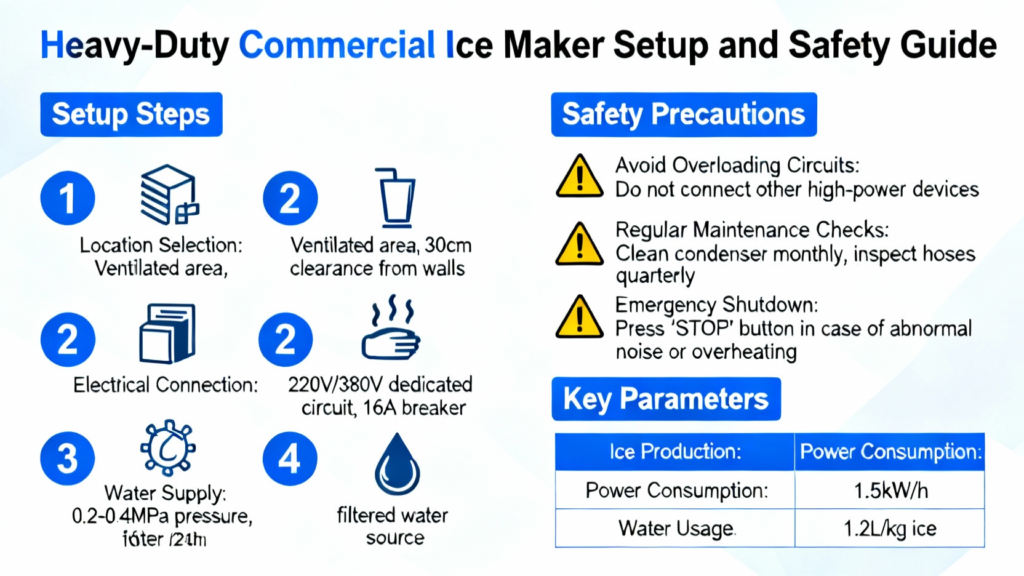
For restaurants, bars, and hotels, a reliable ice maker is the backbone of service. This guide delves into the heavy-duty commercial ice maker, focusing on its durable stainless steel construction, efficient 110V operation, and critical installation requirements. We’ll explore its technical specifications, proper setup for optimal performance, and essential safety protocols to ensure longevity and safe operation in any busy commercial environment.
Engineering for Endurance: Stainless Steel and Eco-Conscious Design
At the core of this unit is its durable stainless steel construction, a material chosen for its exceptional resistance to corrosion, ease of cleaning, and ability to withstand the rigors of a commercial kitchen. This aligns with industry standards where hygiene and durability are paramount. The machine utilizes environmentally friendly R290 refrigerant (propane), a hydrocarbon with a very low Global Warming Potential (GWP). According to Wikipedia, R290 is gaining favor as an eco-friendly alternative to traditional HFCs, though it requires careful handling due to its flammability. Its compatibility with climate types SN, N, ST ensures reliable performance across varied ambient temperatures, from subtropical to temperate zones.
Power, Placement, and Prerequisites for Installation
Proper installation is critical. This commercial ice maker operates on standard 110V 60Hz power with a 780W draw and comes with a 70″ three-prong plug. Crucially, as noted in user discussions on Reddit about appliance safety, using an extension cord is strongly discouraged (as of a 2023 thread) due to overheating risks. Placement requires at least 6 inches of clearance on all sides for airflow, away from heat sources and direct sunlight. The unit must be connected to a drinking water supply with a pressure between 14.5-58 psi; outside this range, a pressure changeover valve is mandatory. Furthermore, a gravity drain line must be installed, with its outlet lower than the machine’s, to handle wastewater and meltwater effectively.
Critical Safety and Initial Startup Protocol
Safety extends beyond electrical concerns. The manual’s warnings to keep the unit from flammable material and to use only water are vital, as other liquids can damage the system or create unsafe ice. Before first use, a specific settling period is required. After delivery, the unit must remain upright for 24 hours to allow compressor oils to settle, a point often emphasized by professionals on forums to prevent immediate failure. Then, after plugging it in, allow an additional hour for the refrigerant to settle before ice production begins. This meticulous startup, combined with the Safety protection type I insulation classification, ensures a safe and reliable foundation for operation.
Optimizing Performance and Long-Term Reliability
For sustained output, environmental factors are key. The surrounding temperature will influence the time of ice making, with higher ambient temperatures typically reducing efficiency. Regular maintenance, implied by the need for clean water and proper drainage, is essential. Models like the 23.2 in. 500 lbs./24h Capacity Commercial Stainless Steel Ice Maker are built for high-volume demand, but their performance hinges on correct installation and care. Avoiding outdoor use prevents contamination and protects components from uncontrolled weather, ensuring the heavy-duty commercial ice maker meets the continuous needs of catering operations.
In summary, integrating a heavy-duty commercial ice maker into your business is an investment in operational efficiency. Its durable stainless steel construction and environmentally friendly R290 refrigerant offer a robust and modern solution. However, its potential is fully realized only through strict adherence to installation guidelines: proper electrical connection without extensions, adequate water pressure and drainage, and ample ventilation space. The mandatory 24-hour settling period post-delivery is a non-negotiable step to safeguard the compressor. By understanding that environmental temperature will influence ice making time and committing to the safety protocols—such as keeping it away from heat and using only water—you ensure the machine’s reliability. Ultimately, whether it’s the featured Commercial Stainless Steel Ice Maker or another model, following these comprehensive steps transforms a powerful appliance into a dependable asset, guaranteeing a steady supply of ice to keep your restaurant, bar, or hotel service running smoothly.
This guide is super helpful for understanding the key installation requirements of a heavy-duty commercial ice maker.
\}}
This guide is super helpful for understanding the key installation requirements of a heavy-duty commercial ice maker.
\}}
This guide is super helpful for understanding the key installation requirements of a heavy-duty commercial ice maker.
\}}
This guide is super helpful for understanding the key installation requirements of a heavy-duty commercial ice maker.
\}}
This guide is super helpful for understanding the key installation requirements of a heavy-duty commercial ice maker.
\}}
This guide is a lifesaver for anyone tackling the heavy-duty commercial ice maker setup—really clarifies those critical installation steps.
\}}
This guide is a lifesaver for anyone tackling the heavy-duty commercial ice maker setup—really clarifies those critical installation steps.
\}}
This guide is a lifesaver for anyone tackling the heavy-duty commercial ice maker setup—really clarifies those critical installation steps.
\}}