
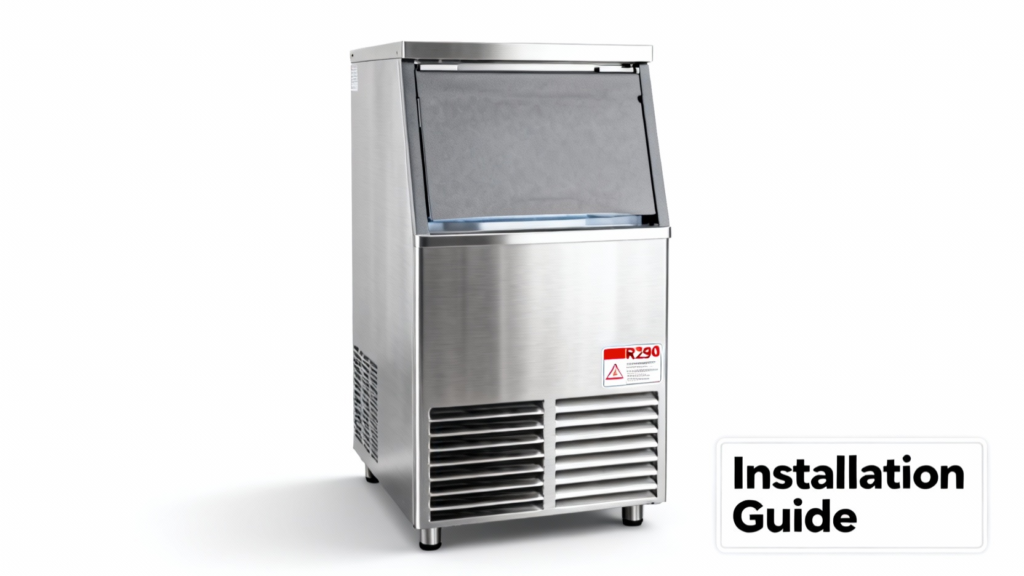
Selecting the right commercial ice maker is a critical decision for any foodservice operation. This article delves into the key features, essential installation requirements, and vital safety considerations for a robust stainless steel model, providing the insights needed to ensure reliable performance and longevity in a demanding environment.
Engineering for Endurance: Stainless Steel and R290 Refrigerant
At the core of a reliable commercial ice maker is its construction and cooling system. The use of durable stainless steel is non-negotiable for hygiene, corrosion resistance, and longevity in high-moisture environments. This material is the industry standard, as noted in discussions on professional kitchen durability. Complementing this is the environmentally friendly R290 refrigerant (propane). According to Wikipedia, R290 has a very low global warming potential (GWP of 3) compared to traditional hydrofluorocarbons (HFCs) and offers excellent thermodynamic properties, leading to potentially higher energy efficiency. This aligns with global shifts towards sustainable refrigeration, as seen in regulatory discussions on platforms like Reddit.
Installation Essentials: Space, Plumbing, and Power
Proper installation is paramount for performance and safety. This unit requires a dedicated drinking water supply with precise pressure (14.5-58 psi) to function correctly. Inadequate pressure can lead to machine failure. Furthermore, a gravity-fed drain connection is mandatory to handle continuous wastewater discharge from the melting ice in the storage bin. Electrically, it’s designed for standard 110V 60Hz operation with a substantial 780W draw. Crucially, the manual advises against using an extension cord, a warning echoed in many appliance safety threads on Reddit where users highlight the fire risks of undersized cables on high-power devices. For a unit built to these specifications, proper planning is key.
Critical Safety and Break-in Protocols
Adhering to safety and initial setup protocols prevents damage and hazards. Key mandates include:
- Providing at least 6 inches of clearance on all sides for airflow, preventing compressor overheating.
- Keeping the unit away from heat sources and flammable materials.
- Allowing a 24-hour settling period after delivery before first use. This lets the compressor oil, which may have shifted during transit, settle back, preventing premature failure—a point often stressed by HVAC technicians in online forums.
- Only using potable water in the unit, as other liquids can damage the system and create unsafe ice.
These steps are not mere suggestions; they are requirements for maintaining the unit’s Safety Protection Type I classification and warranty.
Optimizing Performance in Your Operation
To achieve the stated ice production, understanding environmental factors is crucial. The unit is rated for climate types SN, N, and ST (Sub-Normal, Normal, and Sub-Tropical), meaning it’s engineered to perform reliably in a range of ambient temperatures. However, as noted in the manual, the surrounding environmental temperature will influence the time of ice making. Placing the unit in a hot kitchen near an oven or in direct sunlight will force it to work harder, reducing output and efficiency. Therefore, positioning it in a well-ventilated, cool area is essential for consistent results. For operations needing a high-capacity, dependable machine, evaluating a model like this heavy-duty commercial ice maker is a step toward ensuring service never stops for lack of ice.
In summary, a heavy-duty commercial ice maker is a significant investment that demands careful consideration beyond just ice output. Its stainless steel construction ensures durability in the harsh conditions of a commercial kitchen, while the advanced R290 refrigerant system offers an efficient and environmentally conscious cooling solution. Success hinges on meticulous attention to the installation prerequisites: correct water pressure, proper drainage, and adequate electrical supply without the use of extension cords. Furthermore, strict adherence to the initial break-in period and ongoing safety guidelines—such as maintaining clearance and avoiding heat sources—is critical for safeguarding both the equipment and your premises. By understanding these operational and environmental factors, from climate compatibility to ambient temperature effects, you can fully leverage the machine’s capabilities. Ultimately, choosing a robustly engineered unit and installing it correctly guarantees a reliable supply of ice, supporting seamless service in restaurants, bars, hotels, and catering operations while protecting your investment for the long term.
This installation guide is super helpful for getting that new stainless steel commercial ice maker up and running safely with R290.
\}}
This installation guide is super helpful for getting that new stainless steel commercial ice maker up and running safely with R290.
\}}
This installation guide is super helpful for getting that new stainless steel commercial ice maker up and running safely with R290.
\}}
This installation guide is super helpful for getting that new stainless steel commercial ice maker up and running safely with R290.
\}}
This installation guide is super helpful for getting that new stainless steel commercial ice maker up and running safely with R290.
\}}
This is a really helpful guide for choosing and installing a durable stainless steel commercial ice maker.
\}}
This is a really helpful guide for choosing and installing a durable stainless steel commercial ice maker.
\}}
This is a really helpful guide for choosing and installing a durable stainless steel commercial ice maker.
\}}
Great breakdown of the key features and installation steps for a stainless steel commercial ice maker.
\}}