
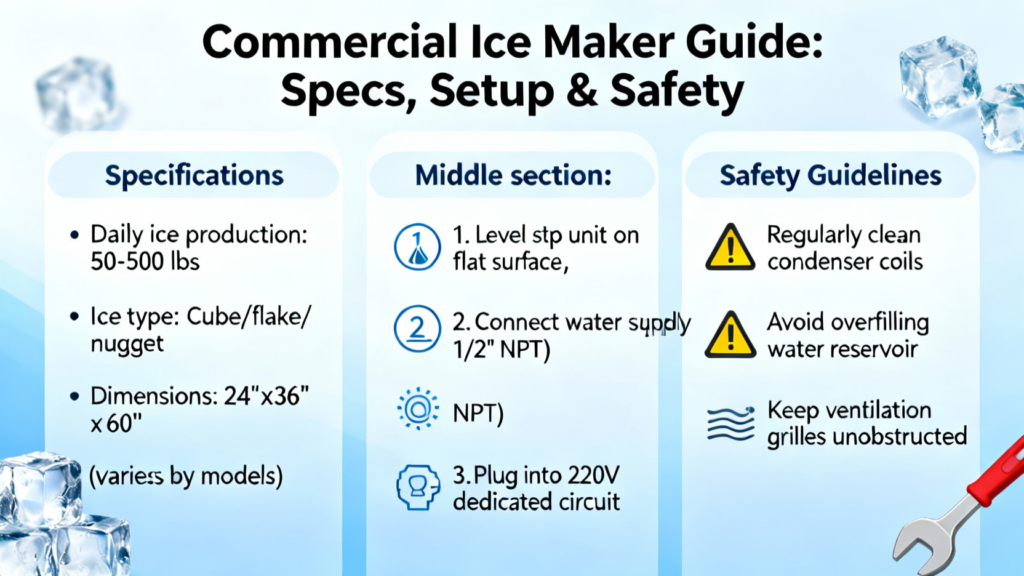
The Ultimate Guide to Heavy-Duty Commercial Ice Makers: Specs, Setup & Safety
Selecting the right commercial ice maker is crucial for hospitality operations. This guide delves into the specifications, proper installation, and critical safety protocols for a durable, stainless steel unit designed for high-volume environments like restaurants and bars, ensuring you maximize your investment.
Engineering for Endurance and Efficiency
At the core of a reliable commercial ice maker is its construction and operational design. The highlighted unit features a durable stainless steel exterior, combating corrosion and simplifying cleaning—a non-negotiable in food service. Its 780W motor operating on standard 110V/60Hz power offers a balance of performance and accessibility. Notably, it uses R290 (propane) refrigerant, an environmentally friendly option with a low Global Warming Potential (GWP). As noted on Wikipedia, hydrocarbons like R290 are gaining favor as sustainable alternatives to HFCs, though they require careful handling due to flammability. The compatibility with climate types SN, N, and ST ensures the compressor is engineered to perform reliably in varied ambient temperatures, from subtropical to temperate zones.
For operations requiring robust output, consider the 23.2 in. 500 lbs./24h Capacity Commercial Stainless Steel Ice Maker, which embodies these heavy-duty principles.
Critical Installation and Setup Protocols
Proper installation is paramount for performance and longevity. This isn’t a simple plug-and-play appliance. It requires a direct connection to a potable water line with a specific pressure range (14.5-58 PSI). Outside this range, a pressure changeover valve is mandatory to prevent mechanical failure. Furthermore, the unit demands significant clearance—at least 6 inches on all sides—for adequate airflow and heat dissipation, a point often stressed by technicians on forums like r/refrigeration in discussions about ice machine serviceability. The gravity-fed drainage system must be installed with the outlet lower than the machine’s port to prevent wastewater backup. Perhaps most critical is the 24-hour settling period after delivery before first use, allowing the refrigeration oil to settle and preventing compressor damage—a standard but vital step for any commercial refrigeration unit.
Non-Negotiable Safety and Operational Guidelines
Safety in commercial kitchens extends to all equipment. This ice maker’s Safety Protection Type I classification and three-prong plug mandate a properly grounded outlet. The manufacturer’s warnings are explicit and based on real hazards:
- No extension cords: The 70-inch cord is designed for the unit’s 780W draw. Using an undersized extension cord can cause overheating and fire, a risk documented in electrical safety discussions.
- Keep away from flammables: The compressor and electrical components generate heat, necessitating distance from combustible materials.
- Indoor use only: Outdoor exposure to elements and temperature extremes can compromise electrical safety and component integrity.
- Water only: Using any other liquid can damage the evaporator plate, alter freezing properties, and contaminate ice, posing a health risk.
Adherence to these guidelines isn’t just about warranty; it’s about operational safety.
Optimizing Performance and Longevity
To ensure the ice maker delivers its promised 500-lb capacity consistently, environmental factors must be managed. The machine should be kept away from direct sunlight and other heat sources like ovens or radiators, as ambient temperature directly impacts freeze cycles and efficiency. As a user on r/KitchenConfidential advised in an August 2023 post, “Your ice machine is a refrigerator. Don’t make it fight a hot environment.” Regular maintenance, such as cleaning the air filter and sanitizing the water distribution system, is essential to prevent scale buildup and bacterial growth, topics extensively covered in food safety guidelines. Choosing a model built for volume, like the commercial stainless steel ice maker, is the first step, but proper care dictates its service life.
Conclusion
Investing in a heavy-duty commercial ice maker is a significant decision that impacts daily operations. As we’ve explored, the choice involves more than just capacity and dimensions; it requires an understanding of the engineering, like the efficient R290 refrigerant system and climate-type compatibility. The detailed installation protocols—from water pressure requirements to the crucial 24-hour settling period—are foundational to preventing immediate failure. Furthermore, the strict safety guidelines, including the prohibition of extension cords and outdoor use, are in place to mitigate real risks of fire and equipment damage, as echoed in professional technician communities online. Finally, long-term performance hinges on environmental management and routine maintenance. By comprehensively understanding these facets—specifications, setup, safety, and sustainment—business owners can ensure their stainless steel commercial ice maker becomes a reliable, efficient asset. This proactive approach maximizes uptime, ensures food safety compliance, and protects the investment, keeping service flowing smoothly during the busiest hours.
This guide really breaks down the specs and safety steps you need to know when setting up a heavy-duty commercial ice maker.
\}}
This guide really breaks down the specs and safety steps you need to know when setting up a heavy-duty commercial ice maker.
\}}
This guide really breaks down the specs and safety steps you need to know when setting up a heavy-duty commercial ice maker.
\}}
This guide really breaks down the specs and safety steps you need to know when setting up a heavy-duty commercial ice maker.
\}}
This guide really breaks down the specs and safety steps you need to know when setting up a heavy-duty commercial ice maker.
\}}
This guide really highlights why choosing the right commercial ice maker is so important for both efficiency and safety.
\}}
This guide really highlights why choosing the right commercial ice maker is so important for both efficiency and safety.
\}}
This guide really highlights why choosing the right commercial ice maker is so important for both efficiency and safety.
\}}
This guide really breaks down the specs and safety setup you need to know when choosing a commercial ice maker.
\}}
This guide really breaks down the specs and safety setup you need to know when choosing a commercial ice maker.
\}}