
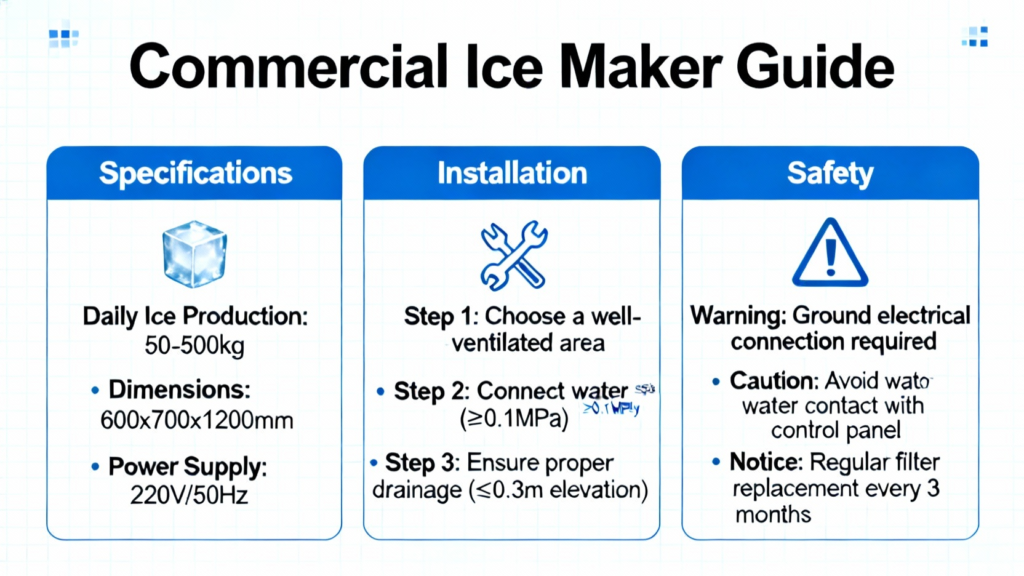
For any high-volume foodservice operation, a reliable ice maker is not a luxury—it’s a necessity. This article provides a comprehensive guide to a heavy-duty commercial ice maker, detailing its robust construction, key specifications, and the critical installation and safety considerations required for optimal, long-lasting performance in demanding environments like restaurants, bars, and hotels.
Engineering for Endurance: Stainless Steel and R290 Refrigerant
At the core of this unit is its durable stainless steel construction, a material chosen for its exceptional resistance to corrosion, ease of cleaning, and ability to withstand the constant use of a commercial kitchen. This aligns with industry standards where stainless steel is preferred for food contact surfaces due to its non-porous nature. Furthermore, the machine utilizes R290 refrigerant, a propane-based solution gaining prominence for its low environmental impact. According to Wikipedia, R290 has a Global Warming Potential (GWP) of just 3, significantly lower than traditional hydrofluorocarbon (HFC) refrigerants, making it a more sustainable choice. Its compatibility with SN, N, and ST climate types ensures reliable ice production in a variety of ambient temperatures.
Specifications and Ideal Application
Designed for standard 110V/60Hz power with a 780W draw, this ice maker integrates into most North American commercial kitchens without requiring special electrical work. With a net weight of approximately 145.51 lb and dimensions of 26.4″ x 23.2″ x 61.4″, it offers a substantial ice-making capacity in a space-efficient footprint. This makes it an ideal solution for businesses with consistent, high ice demand. Operations such as bustling restaurants, busy hotel beverage stations, and catering companies will find this commercial stainless steel ice maker capable of meeting their needs. As noted in a Reddit discussion on commercial equipment, users emphasize that “output and reliability are everything” in a high-pressure service environment, a sentiment that underscores the importance of choosing a well-built unit like this one.
Critical Installation and Setup Protocols
Proper installation is paramount for safety and efficiency. The unit requires a potable water supply with a pressure between 14.5-58 psi; outside this range, a pressure changeover valve is mandatory to prevent damage. A gravity-fed drain line, installed lower than the machine’s outlet, is essential for wastewater disposal. Perhaps the most crucial step is allowing the unit to settle upright for 24 hours after delivery before initial use. This allows the compressor oil and R290 refrigerant to stabilize, preventing potential compressor failure—a point often stressed by technicians in online forums. The unit also requires a minimum of 6 inches of clearance on all sides for adequate airflow and heat dissipation, a common requirement for condenser performance highlighted in equipment manuals.
Operational Safety and Best Practices
Adhering to safety guidelines ensures longevity and prevents hazards. The integrated three-prong plug and 70-inch cord should connect directly to a grounded outlet; using an extension cord is strongly discouraged due to the risk of overheating and fire, a risk frequently cited by electrical safety authorities. The ice maker must be kept away from flammable materials, direct sunlight, and heat sources like stoves, as excessive ambient heat forces the compressor to work harder, reducing efficiency and ice output. It is designed for indoor use only. Importantly, only clean, potable water should be used. Introducing other liquids can damage the internal components and create unsanitary ice, a fundamental health code violation discussed in subreddits like r/KitchenConfidential where proper ice machine maintenance is a recurring topic.
In summary, this heavy-duty commercial ice maker represents a significant investment in the operational workflow of a foodservice business. Its durable stainless steel build and environmentally conscious R290 refrigerant provide a robust and sustainable foundation. However, its technical advantages can only be fully realized through meticulous attention to the outlined specifications. From ensuring correct water pressure and drainage during installation to strictly following electrical safety and operational guidelines, each step is critical for reliable performance. The requirement for a proper settling period post-delivery and adequate ventilation are not mere suggestions but essential practices to safeguard the unit’s compressor and ensure it meets its rated capacity. By understanding and implementing these principles—supported by insights from industry resources and technician communities—business owners can secure a dependable ice supply. This reliability is key to smooth service, customer satisfaction, and ultimately, the profitability of establishments ranging from hotels to high-volume bars, making an informed purchase and proper setup well worth the effort.
This guide really highlights why a reliable commercial ice maker is essential for any busy kitchen.
\}}
This guide really highlights why a reliable commercial ice maker is essential for any busy kitchen.
\}}
This guide really highlights why a reliable commercial ice maker is essential for any busy kitchen.
\}}
This guide really highlights why a reliable commercial ice maker is essential for any busy kitchen.
\}}
This guide really highlights why a reliable commercial ice maker is essential for any busy kitchen.
\}}
This guide really highlights why a reliable commercial ice maker is an absolute must for busy kitchens.
\}}
This guide really highlights why a reliable commercial ice maker is an absolute must for busy kitchens.
\}}
This guide really highlights why a reliable commercial ice maker is an absolute must for busy kitchens.
\}}
This guide really highlights why a reliable commercial ice maker is an absolute must for busy kitchens.
\}}
This guide really highlights why a reliable commercial ice maker is essential for any busy kitchen.
\}}
This guide really highlights why a reliable commercial ice maker is essential for any busy kitchen.
\}}
This guide really highlights why a reliable commercial ice maker is essential for any busy kitchen.
\}}
This guide really highlights why a reliable commercial ice maker is essential for any busy kitchen.
\}}
This guide really highlights why a reliable commercial ice maker is essential for any busy kitchen.
\}}
This guide really highlights why a reliable commercial ice maker is an absolute must-have for busy kitchens.
\}}
This guide really highlights why a reliable commercial ice maker is an absolute must-have for busy kitchens.
\}}
This guide really highlights why a reliable commercial ice maker is an absolute must-have for busy kitchens.
\}}
This guide really highlights why a reliable commercial ice maker is an absolute must-have for busy kitchens.
\}}
This is a really helpful guide for anyone considering a commercial ice maker, especially the safety tips.
\}}
This is a really helpful guide for anyone considering a commercial ice maker, especially the safety tips.
\}}
This is a really helpful guide for anyone considering a commercial ice maker, especially the safety tips.
\}}
This is a really helpful guide for anyone considering a commercial ice maker, especially the safety tips.
\}}
This is a really helpful guide for choosing a commercial ice maker, especially with the detailed safety and installation tips.
\}}
This is a really helpful guide for choosing a commercial ice maker, especially with the detailed safety and installation tips.
\}}
This is a really helpful guide for choosing a commercial ice maker, especially with the detailed safety and installation tips.
\}}
This is a really helpful guide for choosing a commercial ice maker, especially with the detailed safety and installation tips.
\}}
This is a really helpful guide for choosing a commercial ice maker, especially with the detailed safety and installation tips.
\}}