
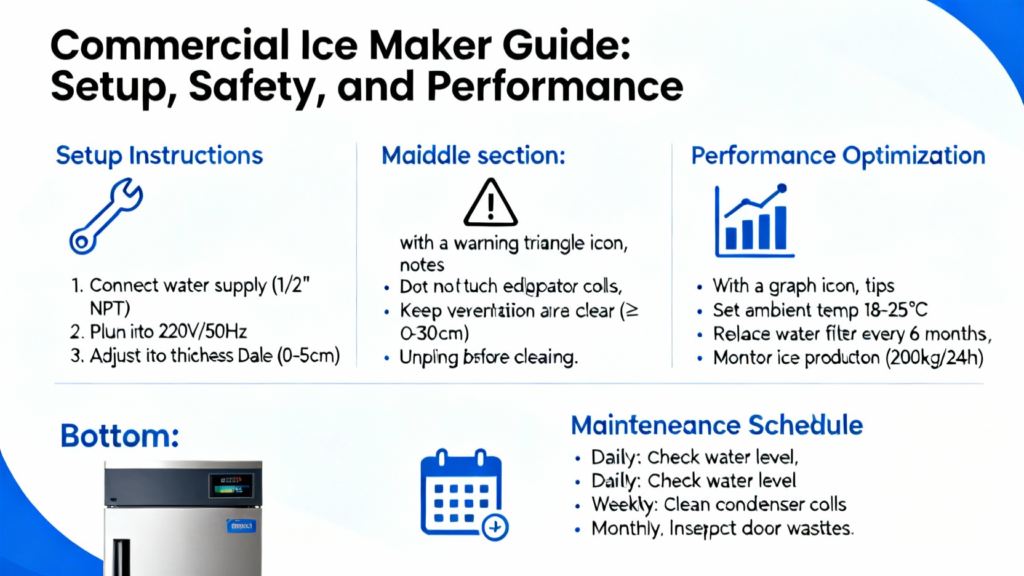
For restaurants, bars, and hotels, a reliable ice supply is non-negotiable. Selecting the right commercial ice maker involves understanding its specifications, installation requirements, and safety protocols to ensure optimal performance and longevity. This guide delves into the critical features and setup of a durable, stainless steel unit, providing the knowledge needed for a seamless integration into your high-demand operation.
Engineering for Commercial Endurance
At the core of this ice maker is a heavy-duty stainless steel construction, chosen for its resistance to corrosion, ease of cleaning, and professional appearance. The use of environmentally friendly R290 (propane) refrigerant is a significant modern advancement. According to Wikipedia, R290 has a Global Warming Potential (GWP) of about 3, drastically lower than traditional HFCs, making it a sustainable choice for businesses mindful of their environmental impact. With compatibility for climate types SN, N, and ST, this commercial ice maker is engineered to perform reliably in varied ambient temperatures, a crucial factor for kitchens and bars that experience heat fluctuations.
Critical Installation and Setup Protocols
Proper installation is paramount for safety and efficiency. The unit requires a dedicated drinking water supply with a pressure between 14.5-58 psi. Pressure outside this range can damage the machine and requires a regulator. Furthermore, a gravity-fed drainage connection is mandatory, as wastewater from the melting ice must flow freely, with the drain outlet positioned lower than the machine’s port. Perhaps the most vital step is allowing the unit to settle upright for 24 hours after delivery before its first use. This allows the compressor oil and refrigerant to stabilize, preventing immediate component failure—a point often emphasized by industry professionals on forums like Reddit.
Operational Safety and Best Practices
Adhering to safety guidelines protects both personnel and equipment. The ice maker must have at least 6 inches of clearance on all sides for adequate airflow, preventing overheating. Its three-prong plug and 70-inch cord should connect directly to a grounded outlet; using an extension cord is a documented fire hazard. Users must avoid placing it near heat sources or flammable materials and should never use liquids other than water to make ice. As noted in a Reddit discussion on appliance safety, a user highlighted that “most commercial appliance failures trace back to improper ventilation or electrical shortcuts” (KitchenConfidential, 2023), underscoring the importance of following manufacturer specs.
Maximizing Performance and Longevity
To ensure consistent ice production, operational environment is key. The machine is designed for indoor use only; outdoor exposure can lead to electrical issues and compromised components. Keeping it out of direct sunlight and away from ambient heat (like stoves) stabilizes the internal temperature, as the surrounding environment directly influences ice-making cycle times. Regular maintenance, including cleaning and sanitizing as per the manual, is essential. The stainless steel ice maker is built for durability, but its lifespan is greatly extended by proactive care and correct operation from day one.
Investing in a commercial ice maker is a significant decision for any foodservice business. Success hinges on moving beyond simply plugging it in. As detailed, it requires a meticulous approach to installation—ensuring correct water pressure, mandatory drainage, and proper electrical connection. Operational vigilance, including maintaining clearance for ventilation and positioning it away from heat, is non-negotiable for safety and efficiency. The shift towards sustainable refrigerants like R290 also reflects a broader industry trend toward environmental responsibility. By understanding the engineering principles, rigorously following setup protocols, and adhering to ongoing best practices, operators can fully leverage the reliability of a heavy-duty stainless steel unit. This comprehensive approach transforms a capable appliance into a cornerstone of your daily operation, ensuring a consistent, high-quality ice supply that meets the relentless demands of a commercial environment while safeguarding your investment for years to come.
This guide is a great reminder that understanding the specs and safety protocols is key to choosing the right commercial ice maker for a busy business.
\}}
This guide is a great reminder that understanding the specs and safety protocols is key to choosing the right commercial ice maker for a busy business.
\}}
This guide is a great reminder that understanding the specs and safety protocols is key to choosing the right commercial ice maker for a busy business.
\}}
This guide is a great reminder that understanding the specs and safety protocols is key to choosing the right commercial ice maker for a busy business.
\}}
This guide is a great reminder that understanding the specs and safety protocols is key to choosing the right commercial ice maker for a busy business.
\}}
This guide really helped me understand the key specifications and safety protocols for choosing a reliable commercial ice maker.
\}}
This guide really helped me understand the key specifications and safety protocols for choosing a reliable commercial ice maker.
\}}
This guide really helped me understand the key specifications and safety protocols for choosing a reliable commercial ice maker.
\}}
This guide really nails the importance of understanding those installation and safety specs for a reliable ice maker.
\}}