
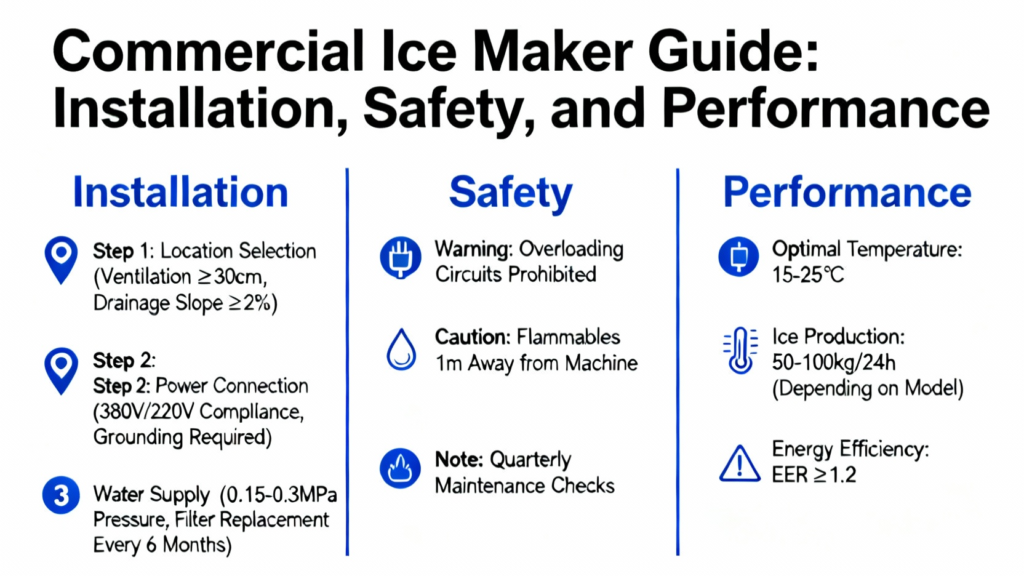
For restaurants, bars, and hotels, a reliable ice maker is essential. This guide explores the key features, installation requirements, and safety protocols for a heavy-duty 110V commercial ice maker with durable stainless steel construction and eco-friendly R290 refrigerant, ensuring you maximize its performance and lifespan.
Engineering for Commercial Endurance
Built for the rigors of daily service, this ice maker’s stainless steel construction is not just about aesthetics; it provides superior corrosion resistance and ease of sanitation, critical in foodservice environments. The use of R290 (propane) refrigerant is a significant modern advancement. According to Wikipedia, R290 has a “negligible ozone depletion potential and very low global warming potential” compared to traditional hydrofluorocarbons (HFCs), making it an environmentally responsible choice that also tends to improve energy efficiency. Its compatibility with climate types SN, N, and ST ensures reliable operation in varied ambient temperatures, a necessity for kitchens and back-of-house areas that may not be perfectly climate-controlled.
Critical Installation and Setup Protocols
Proper installation is paramount for safety and performance. The unit requires a direct connection to a drinking water supply with a specific pressure range (14.5-58 PSI). Deviations require a pressure changeover valve to prevent mechanical issues. Furthermore, a gravity-fed drainage pipe must be installed, with its outlet lower than the machine’s, to handle meltwater discharge efficiently. Perhaps the most crucial step is allowing the unit to settle upright for 24 hours after delivery before its first use. This allows the compressor oil and refrigerant, which may have been disturbed during transit, to settle, preventing compressor damage—a point often emphasized in appliance discussions. As one Reddit user in a 2023 thread on appliance setup advised, “Always, always let your refrigeration units stand upright for as long as the manual says. It’s cheap insurance for an expensive repair.”
Operational Safety and Environmental Guidelines
Adhering to operational guidelines ensures safety and longevity. The unit must have at least 6 inches of clearance on all sides for proper airflow and heat dissipation, preventing overheating. It is equipped with a long 70-inch, three-prong plug, and using an extension cord is strongly discouraged. As noted in electrical safety guidelines, extension cords for high-wattage appliances can overheat, posing a serious fire risk. The machine must be kept away from heat sources and direct sunlight, as ambient temperature directly influences ice production cycles. Importantly, it is designed for indoor use only; outdoor exposure can lead to electrical hazards, component failure, and voided warranties. For operations requiring robust output, consider the 23.23 in. 750 lbs./24h Capacity Commercial Stainless Steel Ice Maker for its high-volume capabilities.
Maximizing Performance and Longevity
To maintain peak efficiency, users should only use potable water to make ice, as other liquids can damage the internal evaporator and water distribution system. Regular cleaning and descaling, as per the manufacturer’s schedule, are non-negotiable to prevent mineral buildup that reduces efficiency and ice quality. The gravity-based wastewater discharge system is simple but requires the drain line to be kept clear of obstructions. Understanding that ice production time varies with the room’s ambient temperature helps set realistic expectations during peak service or in hotter environments. For businesses evaluating their ice production needs, the engineering and capacity of a dedicated commercial stainless steel ice maker are key investment factors.
In summary, this heavy-duty commercial ice maker is engineered for durability and efficiency, featuring stainless steel construction and eco-friendly R290 refrigerant. Success hinges on meticulous attention to installation details—proper water pressure, mandatory drainage, and crucial settling time—all of which protect your investment. Strict adherence to operational safety, including adequate clearance, avoiding extension cords, and indoor use only, mitigates risks and ensures reliable service. Ultimately, pairing this robust hardware with informed best practices in setup and maintenance will deliver the consistent, high-volume ice production that hospitality businesses depend on. By understanding and implementing these guidelines, you transform a powerful appliance into a dependable cornerstone of your daily operations, ensuring it meets demand while maximizing its operational lifespan.
This guide really highlights why a durable **commercial ice maker** is such a crucial investment for busy hospitality businesses.
\}}
This guide really highlights why a durable **commercial ice maker** is such a crucial investment for busy hospitality businesses.
\}}
This guide really highlights why a durable **commercial ice maker** is such a crucial investment for busy hospitality businesses.
\}}
This guide really highlights why a durable **commercial ice maker** is such a crucial investment for busy hospitality businesses.
\}}
This guide really highlights why a durable **commercial ice maker** is such a crucial investment for busy hospitality businesses.
\}}
Great guide—the emphasis on **safety protocols** for that R290 refrigerant is really important for any busy kitchen.
\}}
Great guide—the emphasis on **safety protocols** for that R290 refrigerant is really important for any busy kitchen.
\}}
Great guide—the emphasis on **safety protocols** for that R290 refrigerant is really important for any busy kitchen.
\}}