
The Complete Guide to Heavy-Duty Commercial Ice Makers: Durability, Setup, and Operation
Selecting and installing a heavy-duty commercial ice maker is a critical decision for any food service business. This guide delves into the robust features of a professional-grade unit, provides a detailed walkthrough of proper installation and setup, and outlines essential safety and operational protocols to ensure longevity and peak performance for your establishment.
Engineering for Endurance: Core Features and Construction
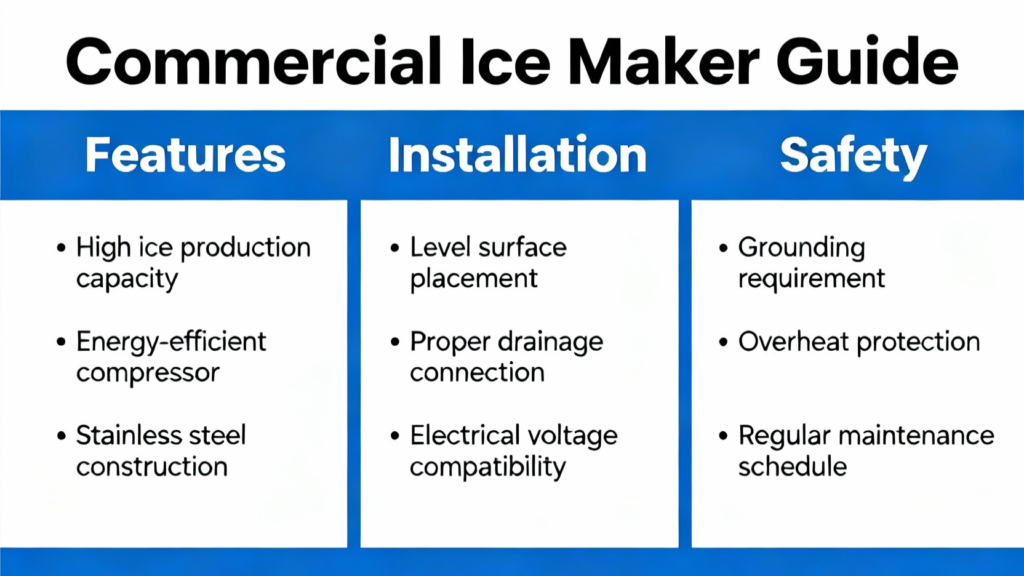
At the heart of a reliable commercial ice maker is its construction and design. The featured unit is built with a durable stainless steel exterior, a standard in the industry for its resistance to corrosion, ease of cleaning, and professional appearance. It operates on a standard 110V/60Hz circuit, drawing 780W of power, making it relatively accessible for most commercial kitchens. A key modern feature is the use of R290 (propane) refrigerant. According to Wikipedia, R290 has a “negligible ozone depletion potential and very low global warming potential” compared to traditional hydrofluorocarbons (HFCs), making it an environmentally progressive choice. Its compatibility with climate types SN, N, and ST indicates it can reliably perform in a range of ambient temperatures from 10°C to 43°C (50°F to 109°F), a versatility appreciated in varied kitchen environments. For a unit embodying these durable features, consider the commercial stainless steel ice maker.
Pre-Installation and Setup: A Critical Phase
Proper setup is non-negotiable for performance and warranty. Upon delivery, the unit must remain upright for 24 hours before being plugged in. This allows the compressor oil, which may have shifted during transit, to settle, preventing severe damage—a point often emphasized by technicians on forums like Reddit. Location is equally crucial: the ice maker requires a potable drinking water supply with a pressure between 14.5-58 psi. Pressure outside this range necessitates a regulator or booster. It also needs a minimum of 6 inches of clearance on all sides for airflow and must be positioned away from direct heat sources like ovens or sunlight. Furthermore, a proper gravity drain line must be installed before operation, as meltwater and system purge water need an escape path lower than the machine’s outlet to prevent internal flooding.
Operational Safety and Best Practices
Adhering to safety guidelines protects your investment and your premises. The unit comes with a three-prong plug for grounding; using an extension cord is strongly discouraged as it can lead to voltage drop, overheating, and fire risk—a common hazard noted in electrical safety discussions. The machine must be kept away from flammable materials and is designed for indoor use only. It is critical to use only water in the unit; other liquids can damage the system or create unsafe ice. As highlighted in a Reddit discussion about appliance longevity from March 2023, consistent preventative care, like ensuring the area is clean and ventilated, directly impacts operational lifespan. These protocols align with the unit’s Safety Protection Type I classification, meaning it has basic insulation and a functional earth connection.
Maximizing Performance and Longevity
To ensure consistent ice production and machine health, understand the variables at play. Ambient temperature significantly influences cycle times; a hotter kitchen will reduce efficiency, underscoring the need for a cool, well-ventilated installation spot. Regular cleaning with approved solutions is vital to prevent scale buildup, which insulates evaporator plates and drastically cuts production. The gravity-based drainage system must remain unobstructed. Users on industry subreddits frequently note that neglected drain lines are a leading cause of unit shutdowns and service calls. Finally, recognizing that the ice in the storage bin will naturally melt and recirculate means the machine is working as designed, not malfunctioning. For a high-capacity model built to handle these demands, explore the heavy-duty commercial ice maker designed for continuous use.
Conclusion
Investing in a commercial ice maker is a significant step toward streamlining your beverage and food service operations. This guide has detailed the importance of the unit’s core engineering—from its stainless steel durability and eco-friendly R290 refrigerant to its broad climate compatibility. We’ve underscored the critical nature of the installation process, including the mandatory 24-hour settling period, correct water pressure, and essential drainage setup, all of which are foundational to avoiding immediate operational failures. The outlined safety and operational protocols, such as avoiding extension cords and using only water, are not mere suggestions but essential practices to mitigate fire risks and equipment damage, as corroborated by community discussions on platforms like Reddit. Ultimately, the performance and lifespan of your stainless steel ice maker hinge on this combination of robust design, meticulous installation, and diligent daily care. By following these comprehensive steps, you secure a reliable ice supply that supports your business’s efficiency and customer satisfaction for years to come.
This guide really helped me understand the key features to look for in a heavy-duty commercial ice maker for our restaurant.
\}}
This guide really helped me understand the key features to look for in a heavy-duty commercial ice maker for our restaurant.
\}}
This guide really helped me understand the key features to look for in a heavy-duty commercial ice maker for our restaurant.
\}}
This guide really helped me understand the key features to look for in a heavy-duty commercial ice maker for our restaurant.
\}}
This guide really helped me understand the key features to look for in a heavy-duty commercial ice maker for our restaurant.
\}}
This guide is a lifesaver for anyone trying to navigate the features and installation of a heavy-duty commercial ice maker.
\}}
This guide is a lifesaver for anyone trying to navigate the features and installation of a heavy-duty commercial ice maker.
\}}
This guide is a lifesaver for anyone trying to navigate the features and installation of a heavy-duty commercial ice maker.
\}}
This guide is a lifesaver for anyone trying to navigate the features and installation of a heavy-duty commercial ice maker.
\}}
This guide is a lifesaver for anyone trying to navigate the features and installation of a heavy-duty commercial ice maker.
\}}
This guide is a lifesaver for anyone trying to navigate the features and installation of a heavy-duty commercial ice maker.
\}}
This guide is a lifesaver for anyone trying to navigate the features and installation of a heavy-duty commercial ice maker.
\}}
This guide is a lifesaver for anyone trying to navigate the features and installation of a heavy-duty commercial ice maker.
\}}