
The Complete Guide to Heavy-Duty Commercial Ice Makers
Investing in a heavy-duty commercial ice maker is a critical decision for any food service business. This guide delves into the robust features of a professional-grade stainless steel unit, explores its operational requirements, and provides essential safety and installation protocols. Understanding these elements is key to ensuring reliable performance, longevity, and optimal ice production for your restaurant, bar, or hotel.
Engineering for Endurance: Core Features & Build
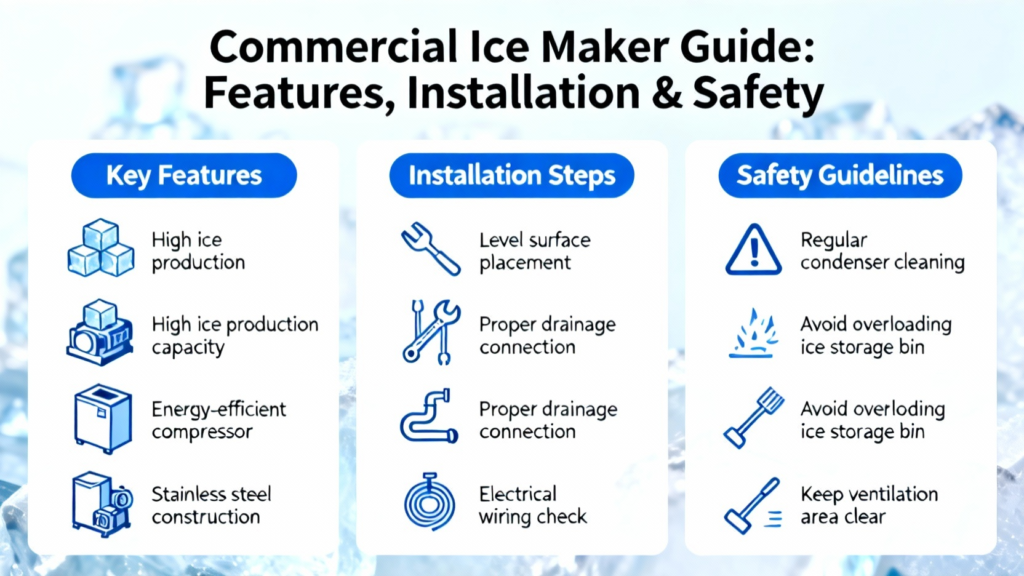
At the heart of a reliable commercial ice maker is its construction and design. The featured unit is built with durable stainless steel construction, a standard in commercial kitchens for its resistance to corrosion, ease of cleaning, and ability to withstand high-volume use. Its compatibility with climate types SN, N, and ST indicates reliable performance across varied subtropical and temperate environments, a specification often guided by international standards. The use of environmentally friendly R290 (propane) refrigerant is a forward-thinking choice. As noted in discussions on refrigerant phases, R290 has a significantly lower Global Warming Potential (GWP) than traditional HFCs, aligning with global environmental regulations like the EPA’s SNAP program. This, combined with a 780W motor designed for standard 110V/60Hz operation, creates a powerful yet efficient ice-making core.
Pre-Installation Essentials: Site & Utility Readiness
Proper installation is non-negotiable for performance and safety. Before the unit arrives, ensure your site meets specific criteria. You must have a dedicated drinking water supply line with water pressure between 14.5-58 psi; pressure outside this range requires a regulator to prevent machine damage. The location needs a minimum of 6 inches of clearance on all sides for adequate airflow and heat dissipation, a common requirement underscored in appliance manuals to prevent overheating. Critically, you must plan for a gravity-fed drain connection. As the machine cycles, meltwater and wastewater are discharged, and the drain outlet must be lower than the machine’s port to function correctly. Finally, ensure a grounded three-prong outlet is within reach of the 70-inch power cord; using an extension cord is a fire hazard and strictly not recommended.
Critical Safety & Initial Startup Protocol
Adhering to safety guidelines protects your investment and your premises. These units contain refrigerant and electrical components, necessitating that they be kept away from flammable materials and direct heat sources like stoves. Perhaps the most crucial step occurs upon delivery: you must let the unit stand upright for 24 hours before initial startup. This allows the compressor oil, which may have been disturbed during transit, to settle. As explained in numerous appliance forums, plugging in a unit immediately after moving it can lead to compressor failure, a costly repair. After this settling period, allow an additional hour for the refrigerant to stabilize before making the first batch of ice. Always use only potable water to make ice, as other liquids can damage the internal system and create health risks.
Optimizing Performance & Long-Term Reliability
For sustained peak output, understand the factors influencing your ice maker. The surrounding ambient temperature directly impacts ice production cycles; a hotter kitchen environment will increase production time and energy use. Therefore, installing the unit in a cool, well-ventilated area, away from direct sunlight, is vital for efficiency. Regular maintenance, as highlighted in industry best practices, includes cleaning the air filter and sanitizing the water system to prevent scale and biofilm buildup, which can affect ice quality and machine health. Choosing a robust model like the commercial stainless steel ice maker is the first step, but its longevity depends on correct installation, mindful operation, and consistent care, ensuring it meets the relentless demands of your business.
Conclusion
Selecting and installing a heavy-duty commercial ice maker is a significant operational decision that extends beyond simple purchase. This guide has detailed the importance of its core engineering—from the sanitary stainless steel build to the eco-conscious R290 refrigerant—and the non-negotiable requirements for site preparation, including water pressure, drainage, and clearance. We’ve emphasized the critical safety protocols, especially the mandatory 24-hour settling period post-delivery, a step often overlooked with dire consequences for the compressor. Furthermore, long-term reliability hinges on understanding environmental factors and committing to regular maintenance. By following these comprehensive guidelines, you ensure that your commercial ice maker operates at peak efficiency, providing a consistent, vital supply of ice that supports seamless service and customer satisfaction in your restaurant, bar, or hotel. A well-chosen and properly cared-for unit is not just an appliance; it’s a dependable backbone of your daily operations.
This guide really clarified the key features to look for in a heavy-duty commercial ice maker before making such an important purchase.
\}}
This guide really clarified the key features to look for in a heavy-duty commercial ice maker before making such an important purchase.
\}}
This guide really clarified the key features to look for in a heavy-duty commercial ice maker before making such an important purchase.
\}}
This guide really clarified the key features to look for in a heavy-duty commercial ice maker before making such an important purchase.
\}}
This guide really clarified the key features to look for in a heavy-duty commercial ice maker before making such an important purchase.
\}}
This guide really helped me understand the key features to look for in a heavy-duty commercial ice maker for our new restaurant.
\}}
This guide really helped me understand the key features to look for in a heavy-duty commercial ice maker for our new restaurant.
\}}
This guide really helped me understand the key features to look for in a heavy-duty commercial ice maker for our new restaurant.
\}}
This guide really helped me understand the key features to look for in a heavy-duty commercial ice maker for our new restaurant.
\}}
This guide really helped me understand the key features to look for in a heavy-duty commercial ice maker for our new restaurant.
\}}
This guide really helped me understand the key features to look for in a heavy-duty commercial ice maker before making such a big investment.
\}}
This guide really helped me understand the key features to look for in a heavy-duty commercial ice maker before making such a big investment.
\}}
This guide really helped me understand the key features to look for in a heavy-duty commercial ice maker before making such a big investment.
\}}