
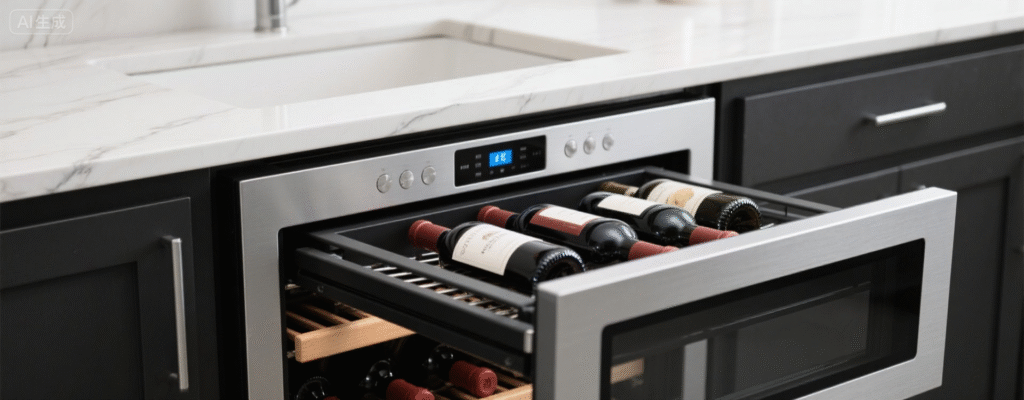
An in-counter wine chiller is more than an appliance; it’s a seamless integration of luxury and functionality for your kitchen or bar. This guide will explore the key advantages of built-in cooling and provide a detailed roadmap for the planning and installation process. Discover how to elevate your home’s design while ensuring your wine collection is stored under ideal conditions.
The Undeniable Advantages of Built-In Cooling
Choosing a built-in in counter wine chiller offers significant benefits over freestanding models, primarily through space optimization and climate control. By integrating directly into your cabinetry, these units free up valuable floor space, creating a streamlined, custom look that enhances your kitchen’s aesthetic. This built-in approach is a cornerstone of modern kitchen design, a trend that has seen a steady rise according to the National Kitchen & Bath Association (NKBA), which has reported a consistent consumer preference for integrated appliances for over a decade.
Beyond aesthetics, the core function of any wine cooler is preservation. High-quality in counter wine coolers offer precise temperature control and often dual-zone technology, allowing you to store reds and whites at their respective perfect serving temperatures simultaneously. Unlike a standard kitchen refrigerator, which is too cold and vibrates excessively, a dedicated wine chiller provides a stable, vibration-free environment. This protects the wine’s delicate chemical structure, preventing premature aging and preserving the intended aroma and flavor profile crafted by the winemaker.
Planning for a Flawless Installation
Successfully incorporating a wine chiller into your counter requires careful planning. The first step is accurate measurement. You must know the exact dimensions of the cut-out space—height, width, and depth—while also accounting for necessary clearance for ventilation and electrical connections. Most built-in units require front-venting, but some may need specific side or rear clearances as outlined by the manufacturer. Neglecting these specifications can lead to overheating and compressor failure.
Another critical decision is choosing between a fully integrated or a front-vented model. A fully integrated unit will be completely concealed by a custom cabinet panel that matches your kitchen’s décor, offering a minimalist appearance. A front-vented model, often with a glass door, displays your collection as a feature. When selecting your perfect wine chiller, also consider capacity, which is measured in bottles, and ensure the unit’s door swing and handle are compatible with your kitchen’s layout to avoid obstructions.
In summary, an in-counter wine chiller is a sophisticated investment that merges elegant design with the science of proper wine preservation. It optimizes space, provides superior temperature and humidity control, and becomes a central feature of your entertaining area. By meticulously planning the installation, from measurements to model selection, you can ensure a seamless addition that will protect and showcase your wine collection for years to come, perfectly blending form with function.