
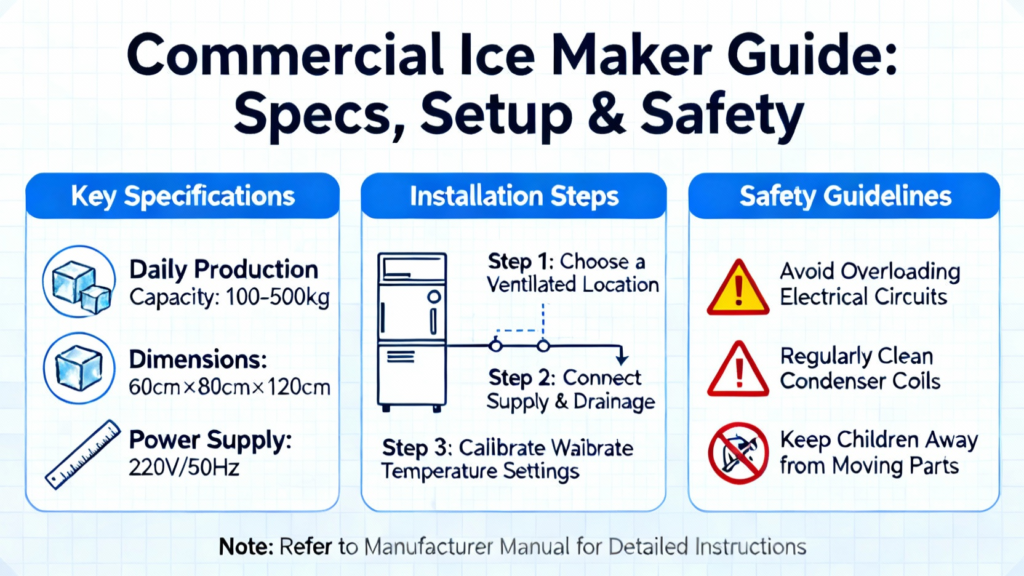
The Ultimate Guide to Your Heavy-Duty Commercial Ice Maker
Investing in a commercial ice maker is a critical decision for any foodservice business. This guide delves into the specifications, essential installation requirements, and vital safety protocols for a durable stainless steel unit, ensuring you maximize its performance and lifespan in demanding environments like restaurants, bars, and hotels.
Engineering for Commercial Endurance
This ice maker is built for the rigors of daily service. Its durable stainless steel construction is not just about aesthetics; it’s a hygienic, corrosion-resistant material that withstands frequent cleaning and high-moisture environments. Powered by a 780W motor for 110V/60Hz operation, it’s designed for standard commercial kitchens. A key feature is its use of R290 (propane) refrigerant, an environmentally friendly option with a low Global Warming Potential (GWP). As noted on Wikipedia, hydrocarbons like R290 are “being increasingly used due to their excellent thermodynamic properties and low environmental impact” compared to traditional HFCs. Its compatibility with climate types SN, N, and ST ensures reliable ice production in varied ambient temperatures, from subtropical to temperate zones.
With a substantial net weight of 145.51 lb and dimensions of 26.4″ x 23.2″ x 61.4″, it’s a sizable piece of equipment. Proper planning for its placement, water supply, and drainage is paramount, as outlined in the unit’s manual. For businesses seeking robust output, exploring a high-capacity commercial stainless steel ice maker is a logical step to ensure a consistent ice supply.
Critical Installation & Setup Protocol
Correct installation is non-negotiable for safety and efficiency. The unit must be connected to a potable drinking water supply with a specific pressure range of 14.5-58 PSI. Water outside this range requires a pressure changeover valve to prevent damage. Furthermore, a gravity-fed drain line must be installed before first use, as meltwater is continuously discharged. The outlet must be lower than the machine’s port to ensure proper flow.
Upon delivery, a crucial but often overlooked step is to let the unit stand upright for 24 hours before plugging it in. This allows the compressor oil, which may have been disturbed during transit, to settle. As discussed by users in appliance forums on Reddit, skipping this step can lead to immediate compressor failure, a costly error. For example, a user in a January 2024 thread emphasized, “Always let it sit. The oil in the compressor needs to settle… you’ll kill it if you don’t.”
Operational Safety & Environmental Requirements
Adhering to safety guidelines protects your investment and your premises. The manual explicitly warns against using extension cords, which can overheat and pose a fire risk, and advises keeping the unit away from flammable materials. It is designed for indoor use only and should be kept out of direct sunlight and away from heat sources like stoves, as ambient temperature directly impacts ice production cycles.
Proper spacing is also a safety and performance feature. Maintaining at least 5.9 inches (15 cm) of clearance on all sides ensures adequate airflow for the condenser, preventing overheating and inefficient operation. This aligns with standard commercial appliance advice, where ventilation is key to longevity. The unit comes with a three-prong grounded plug and a 70-inch cord, which should connect directly to a properly rated outlet.
Optimizing Performance & Long-Term Care
To ensure consistent ice quality and machine health, only use plain water. Adding other liquids can damage the internal components and contaminate the ice. Regular maintenance includes monitoring the water filter (if equipped) and keeping the air intake clean. The wastewater discharge system is gravity-based, so ensuring the drain line remains clear of clogs or kinks is essential to prevent backups and potential water damage.
Understanding that ice production time varies with room temperature helps set accurate expectations during peak service. For operations with higher demand, considering a model with greater daily output, such as a commercial stainless steel ice maker designed for heavy use, can prevent shortages. The built-in Safety Protection Type I classification indicates a high level of electrical insulation and protection against electric shock.
Conclusion: A Strategic Asset for Your Business
This heavy-duty commercial ice maker, with its robust stainless steel build and efficient R290 refrigerant system, is engineered to be a reliable workhorse. However, its performance is directly tied to meticulous installation—including proper water pressure, mandatory drainage, and the critical 24-hour settling period—and strict adherence to operational safety rules, such as avoiding extension cords and ensuring ample ventilation. By understanding the engineering behind its climate compatibility and the reasons for each setup instruction, operators can avoid common pitfalls that lead to downtime.
Integrating this appliance into your operation isn’t just about plugging it in; it’s about following a protocol that respects the machinery’s design parameters. From consulting authoritative sources on refrigerant standards to heeding real-world advice from technical communities on Reddit, a informed approach to installation and care is what transforms this piece of equipment from a simple appliance into a strategic, long-term asset for your restaurant, bar, or hotel. Properly maintained, it will deliver the essential ice supply that keeps beverages cold and service flowing smoothly.
This guide really breaks down everything you need to know about choosing and setting up a commercial ice maker safely.
\}}
This guide really breaks down everything you need to know about choosing and setting up a commercial ice maker safely.
\}}
This guide really breaks down everything you need to know about choosing and setting up a commercial ice maker safely.
\}}
This guide really clarified the key specs and safety steps for setting up my commercial ice maker—thanks for the helpful overview!
\}}
This guide really clarified the key specs and safety steps for setting up my commercial ice maker—thanks for the helpful overview!
\}}
This guide really clarified the key specs and safety steps for setting up my commercial ice maker—thanks for the helpful overview!
\}}
This guide really clarified the key specs and safety steps for setting up my commercial ice maker—thanks for the helpful overview!
\}}
This guide really breaks down the key specs and setup steps you need to know for a commercial ice maker.
\}}
This guide really breaks down the key specs and setup steps you need to know for a commercial ice maker.
\}}