
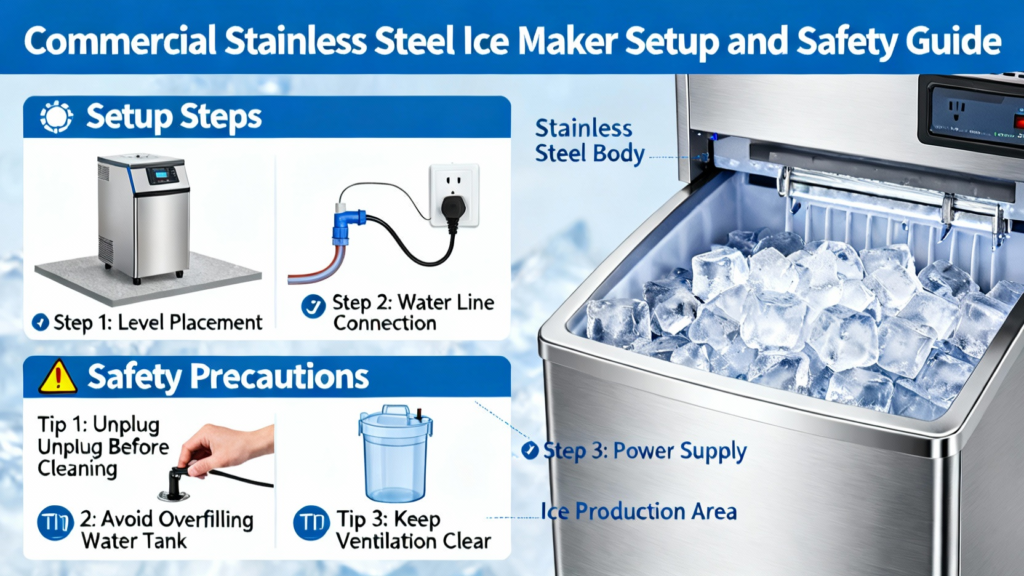
For restaurants, bars, and hotels, a reliable ice supply is non-negotiable. This article delves into the specifications and critical installation requirements of a heavy-duty commercial ice maker built with durable stainless steel. We’ll explore its operational features, essential safety and setup notes, and the importance of proper placement and maintenance to ensure optimal performance and longevity in a demanding commercial environment.
Engineering for Commercial Durability and Efficiency
At the core of this unit is its durable stainless steel construction, a standard in commercial food service for its resistance to corrosion and ease of cleaning. Designed for 110V/60Hz operation, it draws 780W of power, making it compatible with standard commercial kitchen outlets without requiring specialized electrical work. Its use of environmentally friendly R290 (propane) refrigerant is a forward-thinking choice. As noted in discussions on refrigerant trends, R290 has a very low Global Warming Potential (GWP) compared to traditional HFCs, aligning with global environmental regulations like the EPA’s SNAP program. Furthermore, its compatibility with climate types SN, N, and ST ensures reliable ice production in varied ambient temperatures, a crucial factor for kitchens with fluctuating environments.
Critical Pre-Installation and Safety Protocols
Before powering on the commercial ice maker, several non-negotiable steps must be followed to ensure safety and machine integrity. Upon delivery, the unit must remain upright for 24 hours to allow the compressor oil to settle, a common requirement for refrigeration equipment to prevent damage. The ice maker requires a dedicated drinking water supply with a pressure between 14.5-58 psi; pressure outside this range necessitates a regulator to prevent mechanical failure. Safety is paramount: the included three-prong plug must be connected to a grounded outlet, and extension cords are prohibited due to the high current draw, which can cause overheating—a leading cause of electrical fires as frequently cited in safety forums. Users on platforms like Reddit’s r/KitchenConfidential often emphasize the importance of following manufacturer setup guides to avoid costly operational failures.
Optimal Placement and Operational Longevity
Where and how you install this stainless steel ice maker directly impacts its efficiency and lifespan. The machine requires a minimum of 6 inches of clearance on all sides for adequate airflow, preventing the compressor from overheating and reducing energy consumption. It must be kept away from direct sunlight, stoves, or radiators, as excess ambient heat forces the unit to work harder, increasing wear and power usage. Proper drainage is equally critical; the drain pipe outlet must be lower than the machine’s outlet to facilitate gravity-based wastewater removal, preventing stagnant water and microbial growth. As highlighted in a refrigeration technician’s Reddit comment, improper ventilation and drainage are among the top reasons for premature commercial ice machine service calls.
Maintenance and Performance Considerations
Consistent performance from your heavy-duty ice maker hinges on understanding its operational nuances. It is designed for indoor use only; outdoor installation exposes electrical components and the sealed refrigerant system to damaging elements. Only potable water should be used, as other liquids can damage the internal water distribution system and contaminate the ice. Operators should note that ice production time varies with room temperature; a hotter kitchen environment will naturally slow the freezing cycle. Regular cleaning and descaling, as per the manual, are essential to prevent mineral buildup—a point often stressed in industry maintenance guidelines—ensuring both ice quality and machine efficiency over time.
In summary, this heavy-duty commercial ice maker is engineered to meet the rigorous demands of food service operations, combining durable stainless steel construction with efficient, environmentally conscious R290 refrigerant technology. Its reliable performance, however, is contingent upon strict adherence to detailed installation protocols—from allowing proper settling time and ensuring correct water pressure to guaranteeing adequate ventilation and safe electrical connection. Furthermore, long-term viability requires an understanding of its operational parameters, including indoor-only use, pure water supply, and the impact of ambient temperature on production cycles. By following these comprehensive guidelines, which are supported by insights from refrigeration experts and industry standards, operators can maximize the return on investment in this critical piece of commercial equipment. Ultimately, a well-installed and properly maintained ice maker becomes a dependable backbone for daily service, supporting seamless operations in restaurants, bars, hotels, and catering businesses for years to come.
This is a great reminder that proper setup for a stainless steel ice maker is just as crucial as its durable construction.
\}}
This is a great reminder that proper setup for a stainless steel ice maker is just as crucial as its durable construction.
\}}
This is a great reminder that proper setup for a stainless steel ice maker is just as crucial as its durable construction.
\}}
This is a great reminder that proper setup for a stainless steel ice maker is just as crucial as its durable construction.
\}}
This is a great reminder that proper setup for a stainless steel ice maker is just as crucial as its durable construction.
\}}
This stainless steel ice maker guide is a must-read for anyone in hospitality looking to ensure a safe and reliable setup.
\}}
This stainless steel ice maker guide is a must-read for anyone in hospitality looking to ensure a safe and reliable setup.
\}}
This stainless steel ice maker guide is a must-read for anyone in hospitality looking to ensure a safe and reliable setup.
\}}
This stainless steel ice maker guide is a must-read for anyone in hospitality looking to ensure a safe and reliable setup.
\}}
This is a great reminder that proper setup is key to getting the most out of a durable commercial stainless steel ice maker.
\}}
This is a great reminder that proper setup is key to getting the most out of a durable commercial stainless steel ice maker.
\}}
This is a great reminder that proper setup is key to getting the most out of a durable commercial stainless steel ice maker.
\}}
This is a great reminder that proper setup is key to getting the most out of a durable commercial stainless steel ice maker.
\}}