
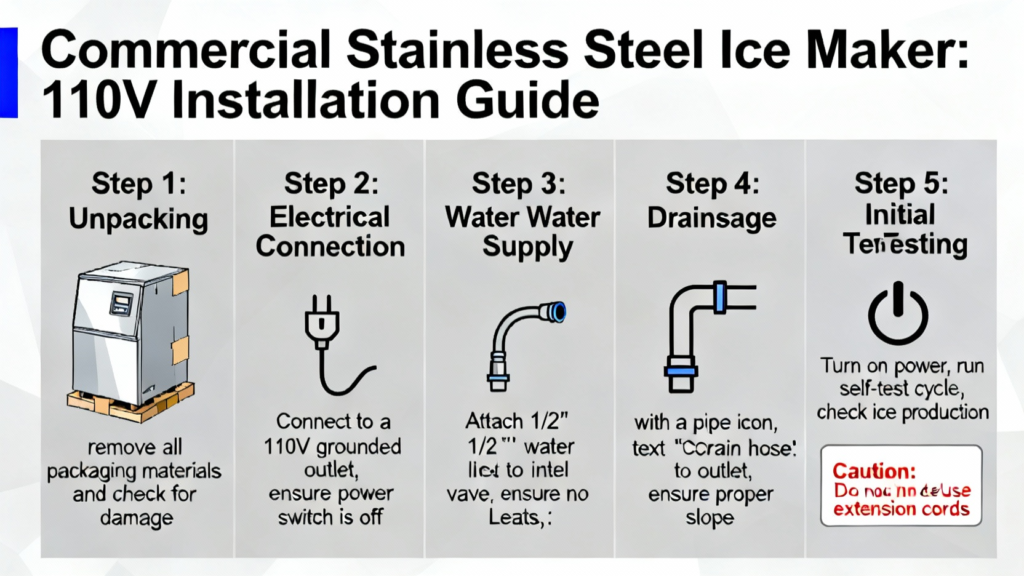
For restaurants, bars, and hotels, a reliable ice maker is non-negotiable. This guide delves into the heavy-duty commercial ice maker, focusing on its durable stainless steel construction, 110V operation, and critical installation requirements. Understanding these specifications and setup notes is key to ensuring optimal performance, safety, and longevity in a demanding foodservice environment.
Engineering for Endurance: Stainless Steel and R290 Refrigerant
The cornerstone of this ice maker’s durability is its stainless steel construction. This material is industry-standard for commercial kitchens due to its superior corrosion resistance, ease of cleaning, and ability to withstand constant use. Paired with this robust build is the use of environmentally friendly R290 refrigerant. R290, or propane, is a natural refrigerant with a very low Global Warming Potential (GWP). As noted on Wikipedia, natural refrigerants like hydrocarbons are gaining favor as alternatives to synthetic refrigerants due to their environmental benefits and energy efficiency. Its compatibility with climate types SN, N, and ST ensures reliable ice production across varied ambient temperatures.
Power, Placement, and Prerequisites for Installation
Proper installation is critical. This unit operates on a standard 110V 60Hz circuit, drawing 780W, but has specific spatial needs: a minimum of 6 inches of clearance on all sides for airflow. The 70″ power cord with a three-prong plug is designed for safety; using an extension cord is strongly discouraged as it can overheat, a point often emphasized in commercial equipment discussions. Furthermore, it requires a direct connection to drinking water supply with a precise pressure range of 14.5-58 psi. A gravity-fed drainage pipe, with its outlet lower than the machine’s, is mandatory to handle wastewater and melted ice.
Critical Safety and Initial Startup Protocols
Adhering to safety and startup guidelines prevents damage and hazards. Key mandates include keeping the unit away from flammable materials and heat sources, and using only water to make ice. Upon delivery, the unit must be left upright for 24 hours before initial use to allow the compressor oil to settle—a common requirement for shipped refrigeration equipment. As users on forums like r/Appliances discuss, this settling period is crucial for compressor longevity. After this wait, allow an additional hour for the refrigerant to stabilize before the first power-on.
Optimizing Performance and Long-Term Operation
For sustained efficiency, operational awareness is key. Environmental temperature directly affects ice production cycles. The machine is for indoor use only; outdoor exposure can damage components and void safety certifications. Regular maintenance, implied by the need for proper drainage and clean water supply, is essential. For businesses seeking a unit with these robust features, exploring a model like the 23.23 in. 750 lbs./24h Capacity Commercial Stainless Steel Ice Maker provides a relevant benchmark for capacity and build quality in this category.
In summary, this heavy-duty commercial ice maker represents a significant investment designed for the rigors of high-volume service. Its stainless steel construction ensures durability, while the R290 refrigerant aligns with modern environmental standards. However, its technical specifications—from the 110V 60Hz power requirement to the precise water pressure range—demand careful attention. The extensive installation and safety notes, such as the mandatory 24-hour settling period, proper drainage, and avoidance of extension cords, are not mere suggestions but essential protocols for safe operation and equipment longevity. Successfully integrating this appliance into a restaurant, bar, or hotel operation requires treating it as a core piece of commercial infrastructure. By meticulously following the guidelines for placement, water connection, drainage, and initial startup, operators can ensure this commercial stainless steel ice maker delivers reliable, consistent performance, supporting seamless service and contributing to the overall efficiency and safety of the foodservice establishment.
This guide really highlights why a durable stainless steel construction is so critical for a commercial ice maker in busy settings.
\}}
This guide really highlights why a durable stainless steel construction is so critical for a commercial ice maker in busy settings.
\}}
This guide really highlights why a durable stainless steel construction is so critical for a commercial ice maker in busy settings.
\}}
This guide really highlights why a durable stainless steel construction is so critical for a commercial ice maker in busy settings.
\}}
This guide is super helpful for understanding the installation requirements of a 110V commercial stainless steel ice maker.
\}}
This guide is super helpful for understanding the installation requirements of a 110V commercial stainless steel ice maker.
\}}
This guide is super helpful for understanding the installation requirements of a 110V commercial stainless steel ice maker.
\}}
This guide is super helpful for understanding the critical installation requirements for a 110V commercial ice maker.
\}}