
The Ultimate Guide to Heavy-Duty Commercial Ice Makers
Selecting and installing a commercial ice maker is a critical decision for any foodservice business. This guide delves into the robust features of a professional-grade unit, explores its environmentally conscious design, and outlines the essential installation and safety protocols to ensure reliable, long-term performance in demanding environments like restaurants, bars, and hotels.
Engineering for Endurance: Core Features & Build
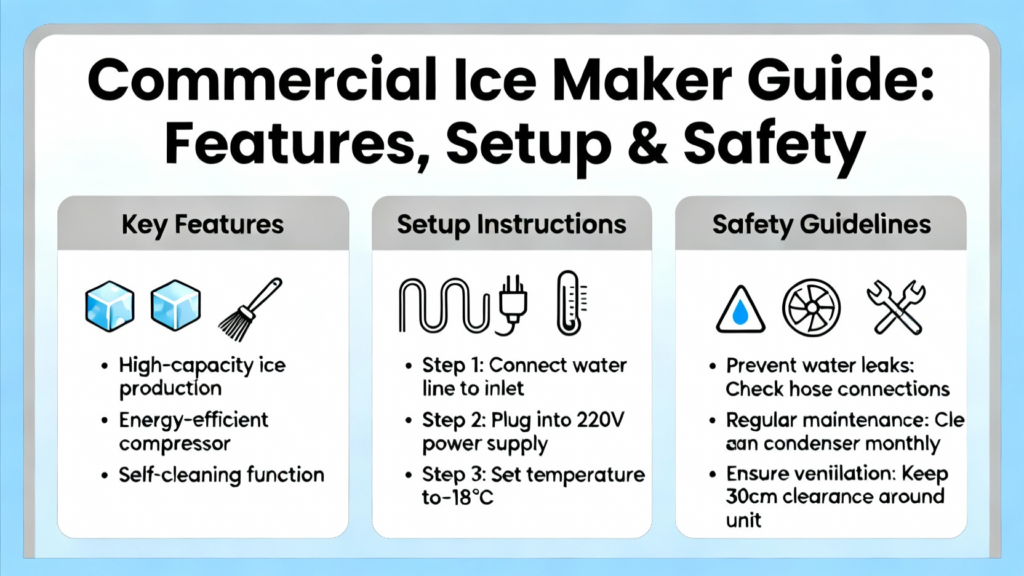
At the heart of a reliable commercial ice maker is its construction and technical specifications. The unit in focus is built with a durable stainless steel exterior, a material renowned in the industry for its corrosion resistance, ease of cleaning, and professional appearance. It operates on standard 110V/60Hz power, drawing 780W, making it compatible with most commercial kitchens without requiring special electrical upgrades. A key modern feature is the use of R290 (propane) refrigerant. According to Wikipedia, R290 has a “negligible ozone depletion potential and very low global warming potential” compared to traditional hydrofluorocarbons (HFCs), making it an environmentally friendly choice. Its compatibility with climate types SN, N, and ST ensures stable operation in varied ambient temperatures, from subtropical to temperate zones.
Strategic Installation: Space, Plumbing, and Power
Proper installation is non-negotiable for optimal performance and safety. The unit requires a dedicated drinking water supply with a pressure between 14.5-58 psi; outside this range, a pressure changeover valve is mandatory to prevent system damage. Critical clearance of at least 5.9 inches (15 cm) on all sides is required for adequate airflow, which is essential for condenser efficiency and preventing overheating. The machine must be connected to a properly grounded three-prong outlet via its included 70-inch cord; using an extension cord is a known fire hazard, a point often emphasized in commercial kitchen discussions on Reddit, where users warn against the risks of “overheating and potential electrical fires” from underrated cables. Furthermore, the gravity-fed drain pipe must be installed with its outlet lower than the machine’s to ensure proper wastewater discharge.
Critical Safety & Operational Protocols
Adhering to safety guidelines protects both your investment and your premises. The unit features a Safety Protection Type I designation, meaning it is grounded. It must be kept away from flammable materials and heat sources like stoves or direct sunlight. A crucial, often overlooked step is the 24-hour settling period after delivery. As explained in a Reddit thread from 2023 on appliance installation, this allows refrigerant oil to settle back into the compressor, preventing “compressor seizure and premature failure” if powered on immediately after transport. Operators must only use water to make ice, as other liquids can damage the internal components and contaminate the ice supply.
Maximizing Performance and Longevity
To ensure the commercial ice maker delivers consistent output, understanding its operational nuances is key. Ice production time is directly influenced by the surrounding ambient temperature; higher room temperatures will naturally increase cycle times. Regular cleaning and maintenance, as per the manufacturer’s instructions, are vital to prevent scale buildup and sanitary issues. The robust stainless steel construction not only looks professional but also withstands the rigorous cleaning chemicals used in commercial settings. It is designed for indoor use only, as outdoor conditions expose it to contaminants, temperature extremes, and moisture that can void warranties and cause operational failures.
Conclusion: A Foundational Investment for Your Business
In summary, a heavy-duty commercial ice maker built with stainless steel and R290 refrigerant represents a smart, sustainable investment for high-volume operations. Its value is realized not just through its durable construction and eco-friendly design, but through meticulous attention to installation and safety details. Ensuring proper water pressure, electrical connections, clearance, and drainage sets the stage for reliable service. The mandatory settling period and adherence to indoor use guidelines are critical to safeguarding the unit’s internal mechanics. By understanding that environmental factors affect production and committing to regular maintenance, business owners can maximize the longevity and efficiency of their equipment. Ultimately, this appliance is more than a machine; it’s a foundational component of daily service, impacting customer satisfaction and operational flow. Choosing a well-built model and following these comprehensive steps ensures a steady supply of ice, allowing you to focus on serving your guests without interruption.
This guide really helped me understand the key features to look for in a commercial ice maker for my new restaurant.
\}}
This guide really helped me understand the key features to look for in a commercial ice maker for my new restaurant.
\}}
This guide really helped me understand the key features to look for in a commercial ice maker for my new restaurant.
\}}
This guide really helped me understand the key features to look for in a commercial ice maker for my new restaurant.
\}}
This guide really helped me understand the key features to look for in a commercial ice maker for my new restaurant.
\}}
This guide really helped me understand the key features to look for in a commercial ice maker for our new restaurant.
\}}
This guide really helped me understand the key features to look for in a commercial ice maker for our new restaurant.
\}}
This guide really helped me understand the key features to look for in a commercial ice maker for our new restaurant.
\}}
This guide really helped me understand the key features to look for in a commercial ice maker for our new restaurant.
\}}
This guide really helped clarify the key features and safety setup I need to consider for my restaurant’s new commercial ice maker.
\}}
This guide really helped clarify the key features and safety setup I need to consider for my restaurant’s new commercial ice maker.
\}}