
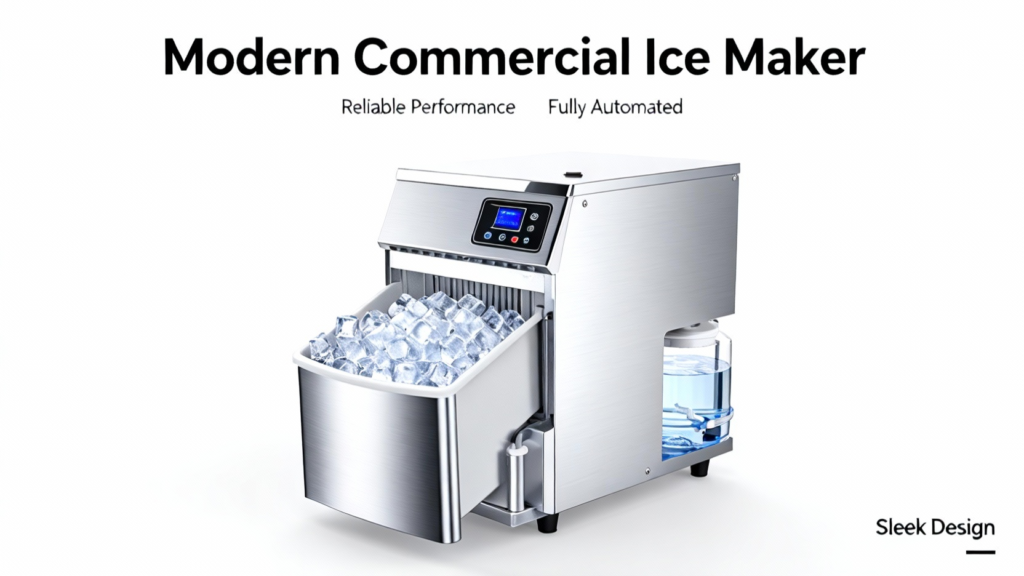
For any business reliant on a steady supply of ice, machine failure or inefficiency can disrupt operations and impact customer satisfaction. This article explores the essential features of modern commercial ice makers, focusing on intelligent alerts, automated maintenance, high-capacity production, and user-centric design that together ensure reliability and performance in demanding environments.
Intelligent Alerts for Proactive Operation
Modern commercial ice makers transcend basic functionality by integrating smart alert systems that prevent downtime. Features like fault alerts and water shortage alerts act as an early warning system, notifying staff of issues before they halt production. This proactive approach is critical in commercial settings, as equipment failure directly affects service. As noted in a discussion on r/KitchenConfidential, consistent ice machine maintenance is vital for smooth restaurant operations. The discreet ice full alert is equally important, preventing energy waste and potential water overflow by automatically pausing ice production when the storage bin reaches capacity.
Automated Maintenance and Consistent Quality
Manual defrosting and descaling are time-consuming chores that are easily overlooked. The auto defrost feature systematically melts frost buildup, ensuring the unit runs at peak efficiency without manual intervention, which conserves energy and extends the machine’s lifespan. Furthermore, the inclusion of a water filter is a non-negotiable for ice quality and machine health. It removes impurities that affect taste and clarity, and more importantly, reduces scale formation. Scale, primarily composed of calcium carbonate, insulates heating elements and clogs water lines, as explained on Wikipedia. This combination of automated defrosting and filtration ensures consistent, clean ice output with minimal manual effort.
Engineered for High-Volume Demand
The core mandate of a commercial unit is to meet high-volume demand reliably. A machine like the 22.3 in. 450 lbs. /24 Hours Split Commercial Ice Maker is designed for this exact purpose. With a production capability of 450 pounds of ice per day and a large-capacity bin holding 300 pounds, it can generate over 14,900 ice cubes daily. This split-system design, where the condenser is separate from the ice-making head, is often more efficient and easier to service in tight kitchen spaces. The 4-adjustable feet ensure perfect leveling, which is crucial for even ice production and proper functioning of the unit’s internal water distribution system.
User-Centric Design and Accessibility
Finally, thoughtful design details significantly enhance daily usability and hygiene. An intuitive touch control panel simplifies operation, while features like a blue-lighted storage bin provide a clear visual indicator of ice levels in any lighting. The flip-up ice bin door and included scoop facilitate quick, sanitary access without needing to open the entire storage compartment. Practical drainage options, including both water pump drainage and gravity drainage, offer installation flexibility to suit various kitchen layouts, ensuring water from melting ice is properly managed.
In conclusion, selecting a commercial ice maker requires looking beyond simple output numbers. As we’ve detailed, the integration of intelligent monitoring systems prevents operational hiccups, while automated maintenance features like auto defrost and water filtration protect your investment and ensure ice quality. The high-volume capacity of a model like the Tittla split commercial ice maker is engineered to meet the demands of busy establishments without interruption. Ultimately, these technologies converge with user-centric design—from leveling feet to lighted bins and flexible drainage—to create a seamless experience. This holistic approach to design ensures that the machine not only produces ice reliably but also integrates smoothly into daily workflows, proving that in a commercial kitchen, reliability, automation, and thoughtful engineering are the true pillars of uninterrupted service and customer satisfaction.
This article really highlights how essential **reliability** and automation are for keeping operations running smoothly.
\}}
This article really highlights how essential **reliability** and automation are for keeping operations running smoothly.
\}}
This article really highlights how essential **reliability** and automation are for keeping operations running smoothly.
\}}
This article really highlights how essential **reliability** and automation are for keeping operations running smoothly.
\}}
This article really highlights how essential **reliability** and automation are for keeping operations running smoothly.
\}}
This article really highlights how essential **reliability** is in a commercial ice maker to keep daily operations running smoothly.
\}}
This article really highlights how essential **reliability** is in a commercial ice maker to keep daily operations running smoothly.
\}}
This article really highlights how essential **reliability** is in a commercial ice maker to keep daily operations running smoothly.
\}}