
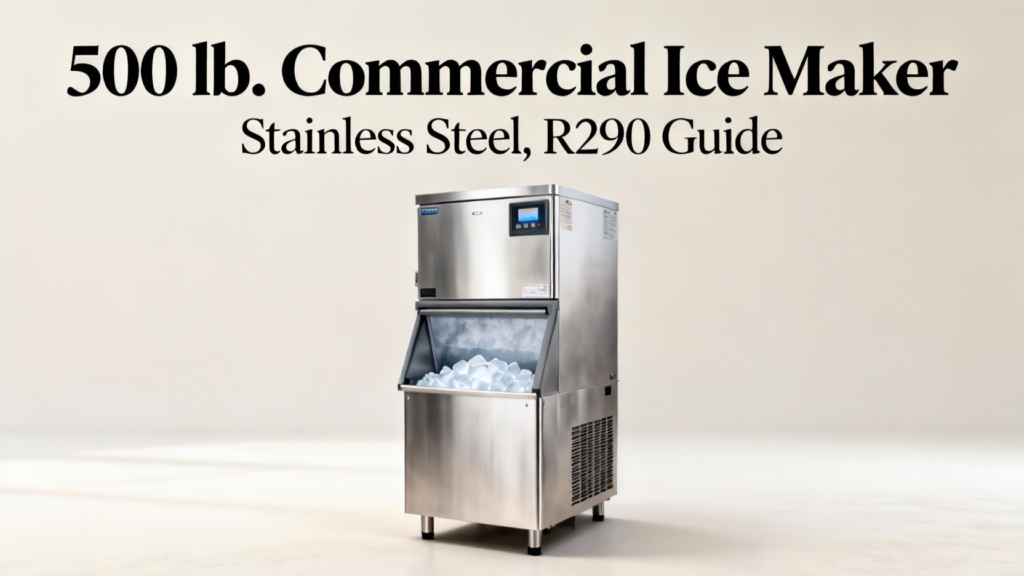
Selecting the right commercial ice maker is a critical decision for any foodservice operation. This guide delves into the essential features, installation requirements, and operational best practices for a heavy-duty 500 lb./24h capacity stainless steel unit, ensuring you maximize your investment in reliable ice production.
Engineering for Endurance: Stainless Steel and R290 Refrigerant
At the core of this ice maker’s durability is its stainless steel construction, a material chosen for its corrosion resistance, ease of cleaning, and ability to withstand the high-moisture, high-use environment of commercial kitchens. This aligns with industry standards where stainless steel is preferred for food contact surfaces and equipment longevity. Furthermore, the unit utilizes R290 refrigerant, a propane-based solution gaining prominence for its low environmental impact. According to Wikipedia, R290 has a “negligible ozone depletion potential and a very low global warming potential” compared to traditional hydrofluorocarbons (HFCs), making it a more sustainable choice as regulations evolve.
Pre-Installation Essentials: Space, Power, and Water
Proper installation is non-negotiable for performance and safety. This model requires specific conditions:
- Ventilation & Space: A minimum 5.9 inches (15 cm) of clearance on all sides is mandatory for adequate airflow, preventing compressor overheating and efficiency loss.
- Electrical Requirements: Operating on standard 110V/60Hz power with a 780W draw, it includes a 70-inch three-prong plug. Crucially, extension cords are not recommended due to the risk of overheating, a point often emphasized in commercial kitchen safety discussions.
- Water Supply & Drainage: It must be connected to a potable drinking water line with pressure between 14.5-58 PSI. A gravity-fed drain line, positioned lower than the machine’s outlet, is essential for wastewater disposal, as meltwater is continuously discharged.
Critical Safety and Break-in Protocols
Adhering to safety and initial setup guidelines prevents damage and hazards. Key steps include:
- 24-Hour Settling Period: After delivery, the unit must remain upright for 24 hours before being plugged in. This allows the refrigerant and oils to settle after potential tilting during transport, a common requirement for compressor longevity.
- Safe Placement: The ice maker must be kept away from flammable materials, direct sunlight, and heat sources like stoves. It is designed for indoor use only.
- Proper Operation: Only water should be used to make ice. Users should be aware that ambient temperature affects ice production times, with higher room temperatures typically slowing output, as noted in user experiences on forums like this Reddit thread discussing ice machine performance.
Optimizing for High-Volume Operations
With a 500 lb./24h capacity145.5 lb. net weight when planning placement. For operations seeking this specific blend of capacity and footprint, the 23.2 in. 500 lbs./24h Capacity Commercial Stainless Steel Ice Maker represents a robust solution. Understanding the total cost of ownership, including energy use with the 780W compressor and maintenance of the stainless steel exterior, is key for long-term satisfaction.
In conclusion, integrating a heavy-duty commercial ice maker like this stainless steel model is a significant step toward operational efficiency. Its durable construction, environmentally conscious R290 refrigerant, and high output are major assets. However, its performance is wholly dependent on meticulous attention to the prerequisites: sufficient clearance, correct water pressure and drainage, strict adherence to the electrical and break-in protocols, and indoor placement away from heat. As highlighted by both manufacturer guidelines and crowd-sourced user knowledge—such as the importance of the settling period and ambient temperature effects discussed by professionals on Reddit—these factors are not mere suggestions but essential for reliability and safety. By thoroughly planning for these requirements, businesses can ensure this commercial ice maker becomes a dependable workhorse, meeting peak demand while minimizing downtime and repair costs, ultimately protecting your investment and supporting seamless service.
This guide is a lifesaver for understanding the installation and operation of a heavy-duty 500 lb. commercial ice maker.
\}}
This guide is a lifesaver for understanding the installation and operation of a heavy-duty 500 lb. commercial ice maker.
\}}
This guide is a lifesaver for understanding the installation and operation of a heavy-duty 500 lb. commercial ice maker.
\}}
This guide is a lifesaver for understanding the installation and operation of a heavy-duty 500 lb. commercial ice maker.
\}}
This guide is a lifesaver for understanding the installation and operation of a heavy-duty 500 lb. commercial ice maker.
\}}
This guide is a huge help for understanding the installation and operation of a 500 lb. commercial ice maker.
\}}
This guide is a huge help for understanding the installation and operation of a 500 lb. commercial ice maker.
\}}
This guide is a huge help for understanding the installation and operation of a 500 lb. commercial ice maker.
\}}
This guide is super helpful for understanding the installation and maintenance of a heavy-duty **commercial ice maker** like this 500 lb. unit.
\}}
This guide is super helpful for understanding the installation and maintenance of a heavy-duty **commercial ice maker** like this 500 lb. unit.
\}}